By Quentin Solt
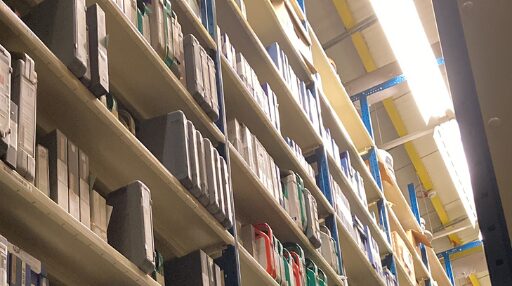
Millions of culturally important works sit in storage because the cost of trying to seek permission exceeds what any single work appears to be worth. The UK Government has estimated that at least 91 million culturally valuable works could be unlocked through the orphan works regime.[1] These include photographs, manuscripts, sound recordings and countless other items whose creators cannot be traced, leaving their copyright status unresolved. Returning any one of them to public view requires a diligent search: trawling archives, contacting collecting societies, searching image libraries and assembling the evidence. For most collections, that search costs more than the individual work appears to justify, so the works remain in storage. The result is a vast reserve of culture held back from the people it was created to serve.
Diligent search has a well-established legal meaning. To obtain a licence under the UK’s orphan works licensing scheme (OWLS) administered by the Intellectual Property Office, an applicant must undertake and evidence a diligent search for the copyright owner before a licence can be granted.[2] The position became more challenging following the UK’s departure from the European Union, when the EU orphan works exception ceased to apply to UK-based institutions and was repealed from UK law.[3] UK cultural heritage institutions can still use applicable copyright exceptions, or seek a licence through the UK orphan works licensing scheme.[3] to use the work domestically. However, the practical challenge remains: diligent search takes time, may involve significant cost and has prevented many works from becoming accessible.[4] This is where the most useful idea in applied AI comes into view. A system does not need to outperform the world’s leading copyright specialists to transform the economics. It needs only to become capable enough that searches which could never previously have been justified can now be undertaken routinely, quickly and economically.
Its real competitor is inertia.
The comparison should not be between an AI-assisted diligent search and an expert manually reviewing millions of works. That was never economically possible. The comparison is between an AI-assisted diligent search costing a fraction of the conventional manual process and a search that would otherwise never happen at all. On OWH’s own analysis, that assisted search can cost around 90 per cent less than the traditional manual approach.[5] The platform is grounded in recognised sector expertise. The copyright knowledge and practical judgement that Naomi Korn Associates has developed over more than two decades helps shape how OWH approaches a diligent search. The platform extracts metadata, matches images, interrogates rights databases and assembles the evidence into a transparent report with confidence scores and supporting reasoning. The institution’s own specialists evaluate that evidence, determine the appropriate level of risk and make the final decision.
The machine does the searching. The specialist owns the decision.
That distinction leads to what we call the Consumption Paradox. As the cost of each search falls dramatically, the number of searches that become economically viable rises dramatically. More searches can be undertaken using fewer people than was previously imaginable. Institutions move from asking which handful of objects justify investigation to asking whether whole collections can now be opened. Routine searching increasingly migrates to the machine, with the human curator providing oversight, expertise and control. The sector can undertake vastly more diligent searches while progressively less human effort is required for each search and the expertise of the resident curator is harnessed where it creates most value. The curator’s contribution can be applied to interpreting the evidence, weighing uncertainty and exercising judgement on risk.
More efficient, more valuable, more culture released as it should be.
Automation does not remove accountability. It makes expert judgement even more valuable because responsibility for the final decision still rests with the institution.
As OWH develops, the accumulated results of diligent searches and expert review also have the potential to become a growing body of sector knowledge. Expertise that once resided primarily in individual experience can increasingly be captured, structured and applied consistently across collections, helping museums, archives and galleries benefit from knowledge that would otherwise remain fragmented.
For organisations already working with OWH, this should be reassuring. Your expertise is not being displaced; it is defining the standard the technology is designed to support. Your time shifts away from repetitive searching towards the complex judgements that only experienced professionals can make.
For organisations yet to begin that journey, the opportunity is equally compelling. Naomi Korn Associates’ deep sector expertise, combined with Orphan Works Hub’s AI platform, makes it possible to unlock collections that have remained inaccessible for years at a cost that finally makes the exercise worthwhile. The future of AI in cultural heritage is not about replacing the people who care for our collections. It is about capturing their expertise, preserving it and enabling it to benefit millions more works than any individual could ever review alone.
References and further reading
[1] UK Intellectual Property Office, “UK opens access to 91 million orphan works”, 29 October 2014.
UK Government announcement accompanying the launch of the orphan works licensing scheme, stating that it could give wider access to “at least 91 million culturally valuable creative works”.
https://www.gov.uk/government/news/uk-opens-access-to-91-million-orphan-works
[2] Intellectual Property Office, “Copyright: orphan works”.
Current guidance on the UK orphan works licensing scheme, including the requirement to undertake a diligent search before applying for an orphan works licence.
https://www.gov.uk/guidance/copyright-orphan-works
[3] Intellectual Property Office, “Orphan works and cultural heritage institutions”.
Guidance confirming that the EU orphan works exception no longer applies to UK-based institutions and was repealed from UK law, and explaining the options available to UK cultural heritage institutions.
https://www.gov.uk/guidance/orphan-works-and-cultural-heritage-institutions
[4] Intellectual Property Office, “Orphan works licensing scheme overview for applicants”.
IPO guidance explaining the diligent search requirement and acknowledging that a diligent search takes time and may involve costs.
https://www.gov.uk/government/publications/orphan-works-overview-for-applicants/orphan-works-licensing-scheme-overview-for-applicants
See also: The National Archives, “Copyright – guidance on orphan works”, which directs archive services to guidance on conducting diligent searches and identifies copyright exceptions and other considerations relevant to digitisation projects.
https://www.nationalarchives.gov.uk/archives-sector/legislation/copyright/
[5] Orphan Works Hub internal analysis.
The estimated saving of around 90 per cent compared with a conventional manual diligent search is an OWH calculation. The assumptions and methodology supporting this estimate are retained by OWH.