Copyright attaches to a work the moment it’s created and lasts until legal expiry, but the relationship between the creator, the work and the copyright can change over time as ownership changes and records can easily become fragmented.
With limited exceptions, use of a work that is still in copyright requires permission from the copyright holder, but things get difficult if the holder cannot be identified or traced.
A creative work whose copyright holder cannot be traced after a search that meets legal and professional standards (a diligent search) is known as an orphan work.
There are estimated to be many tens of millions of orphan works in the UK alone: photographs, films, recordings, manuscripts, artworks. Much of it is culturally significant. All of it is effectively frozen and the legal system designed to protect creators ends up working against the public interest.
Anyone who wants to use a work whose copyright status is not known — a museum digitising its archive, a filmmaker using historical footage, a publisher reprinting a forgotten novel — faces the cost of searching for a copyright holder and if the work proves to be an orphan, potential exposures they cannot fully resolve, because there is no one to ask for permission.
In the past, when diligent searches were performed manually and the cost of managing the uncertainty was high, the rational response was not to make use of the work, so it stayed locked away, not because anyone chose to withhold it, but because the burden of using it was too onerous.
Orphan Works Hub changes these dynamics. We have created tools and established services to perform more effective searches at far lower cost, reconstructing copyright records where possible, rewarding rights holders when they can be traced and creating sustainable arrangements for the use of orphan works when they cannot.
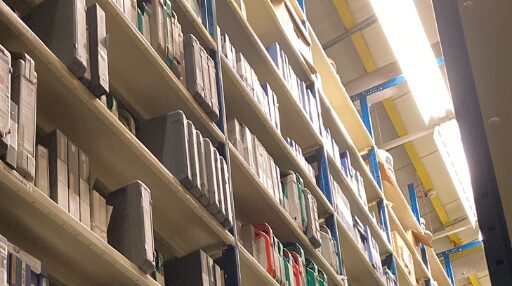
Featured Image: (c) Ian Soanes